

Memory, Context & Sessions
Why Claw feels stateful and how its session model affects power-user workflows.
Claw Is Not Stateless
Claw does not behave like a fresh bot on every message.
It keeps continuity through a mix of:
- Telegram conversation history
- app-level conversation state
- a warm per-user runtime when available
- a Claude session that can be resumed across messages
For power users, that means you can do iterative work instead of rebuilding context every time.
What This Feels Like In Practice
- follow-up questions can stay compact
- file-based workflows can continue across messages
- Claw can keep working in the same operating context instead of starting from zero
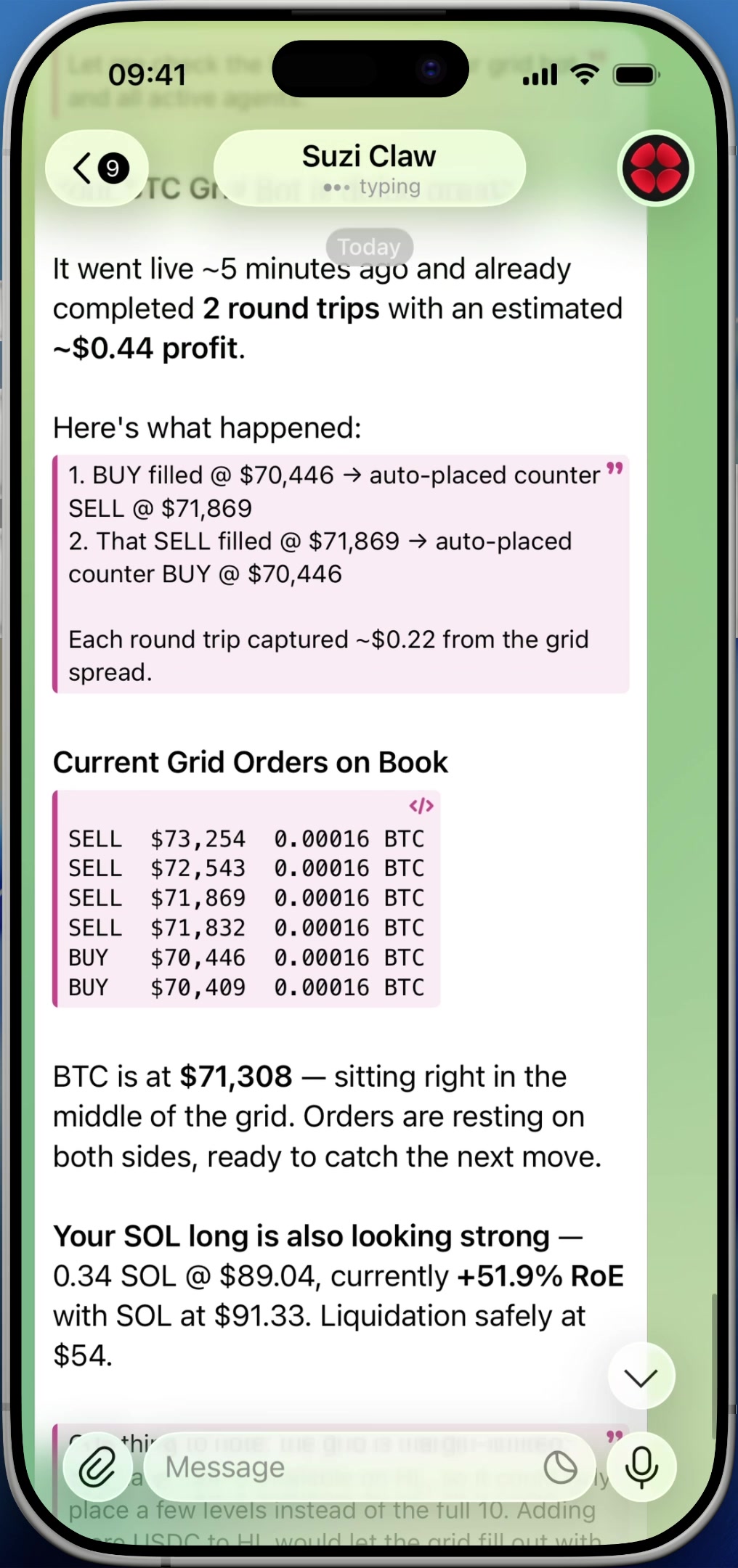
- ongoing reviews of agents, balances, and positions feel more like a session than a support bot
Important Reality
Claw uses persistent runtime behavior when possible. It is not best described as an "ephemeral sandbox per message."
That matters because:
- context can carry forward
- generated files may still matter in later turns
- the runtime may be resumed instead of recreated
When State Changes
Session continuity is strong, but not absolute.
State can change when:
- the runtime is recreated
- the underlying template changes
- account auth changes require runtime migration
- an earlier session is no longer available
The right user expectation is: Claw usually feels persistent, but it is still a managed runtime rather than your own always-on shell.
How To Use That
For power users, this changes how you prompt:
- you can build on prior work
- you can ask for revisions to generated outputs
- you can keep a thread focused on one operational task
If you want the user-level knobs on top of this runtime, see Models & Preferences.